



Childcare centres need a higher level of cleaning than many ordinary commercial premises because children frequently touch shared surfaces, play closely together and may be more vulnerable to the spread of infections. For centres in Kiama, Dapto and Shellharbour, having a consistent cleaning schedule is essential for maintaining a hygienic and welcoming environment.
So, how often should a childcare centre be cleaned? The answer depends on the area, level of use and type of contamination, but routine cleaning should generally occur every day, with high-touch and contamination-prone areas requiring more frequent attention.
Why Is Regular Childcare Cleaning Important?
Children interact with toys, furniture, floors, doors, bathrooms and play equipment throughout the day. Without regular cleaning, germs and dirt can accumulate on frequently touched surfaces.
NSW guidance and childcare procedures emphasise routine cleaning and maintaining premises, furniture and equipment in a clean and safe condition. Regular cleaning also helps reduce the number of germs present in the environment.
For childcare centres in Kiama, Dapto and Shellharbour, a structured cleaning plan can help staff identify what needs to be cleaned, when it needs to be cleaned and which cleaning method should be used.
Which Areas Should Be Cleaned Every Day?
Daily childcare cleaning in Kiama and the other mentioned regions should cover the main areas children and staff use throughout the day. This commonly includes:
- Floors and carpets
- Toilets and handwashing areas
- Kitchen and food preparation areas
- Tables, chairs and benches
- Door handles and other high-touch points
- Nappy-changing areas
- Bins and waste areas
- Frequently used toys and equipment
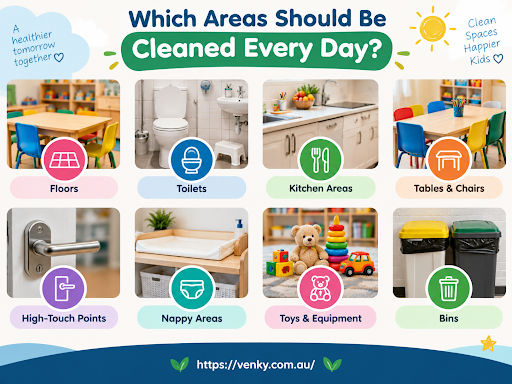
Cleaning should also take place whenever surfaces become visibly dirty. If bodily fluids such as vomit, urine, faeces or blood are present, the affected area should be cleaned and disinfected promptly rather than waiting for the scheduled clean.
How Often Should Toys and Play Equipment Be Cleaned?
Toys and play equipment can require frequent cleaning because children handle them repeatedly and may put toys in their mouths.
Frequently used toys should be cleaned according to the centre’s hygiene procedures, particularly when visibly dirty or contaminated. Shared equipment and high-touch surfaces may require additional cleaning throughout the day.
Outdoor play equipment should also form part of the centre’s cleaning and maintenance schedule rather than being overlooked during routine indoor cleaning.
How Often Should Bathrooms and Nappy Areas Be Cleaned?
Bathrooms and nappy-changing areas deserve particular attention because they can be exposed to bodily fluids and high levels of contact.
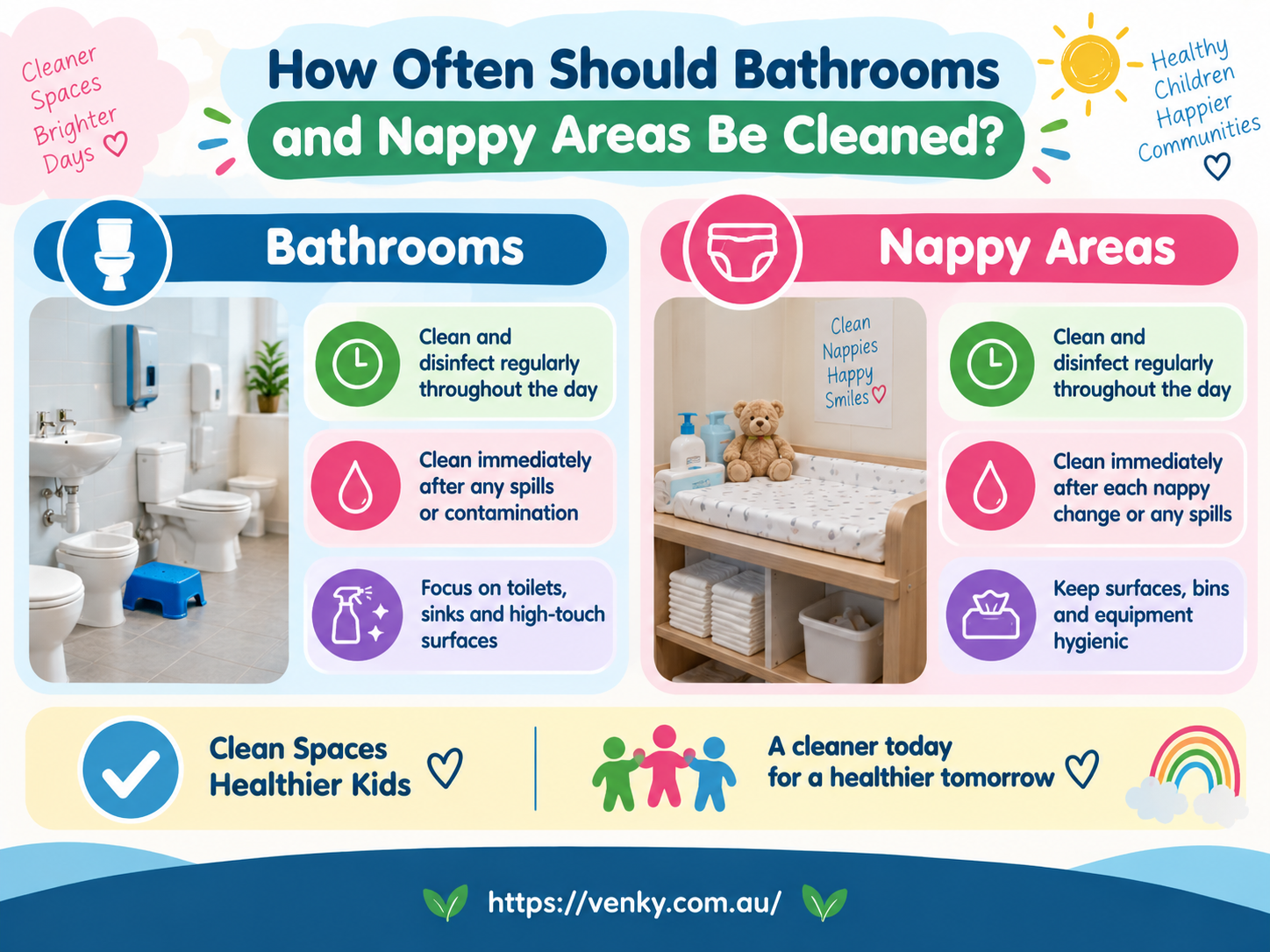
These areas should be cleaned and disinfected regularly throughout the day, with immediate cleaning following contamination. Childcare hygiene procedures should also ensure appropriate handwashing facilities, soap and drying supplies are available.
NSW regulations require appropriate hygienic facilities for nappy changing and require indoor spaces to be maintained in conditions that support children’s safety and wellbeing.
What About Deep Cleaning?
Daily childcare cleaning in Dapto and the other regions should be supported by periodic deep cleaning. Tasks may include detailed cleaning of carpets, upholstery, windows, walls, high surfaces, storage areas and less accessible parts of furniture and equipment.
The exact frequency should depend on the centre’s size, number of children, activities, flooring, equipment and level of use. A documented cleaning schedule can help ensure less frequent tasks are not forgotten. NSW guidance also recognises cleaning schedules that identify what needs cleaning and how often specific items should be addressed.
Should Cleaning Increase During an Illness Outbreak?
Yes. If an infectious disease outbreak occurs, a childcare centre may need to increase cleaning and disinfection beyond its normal routine.
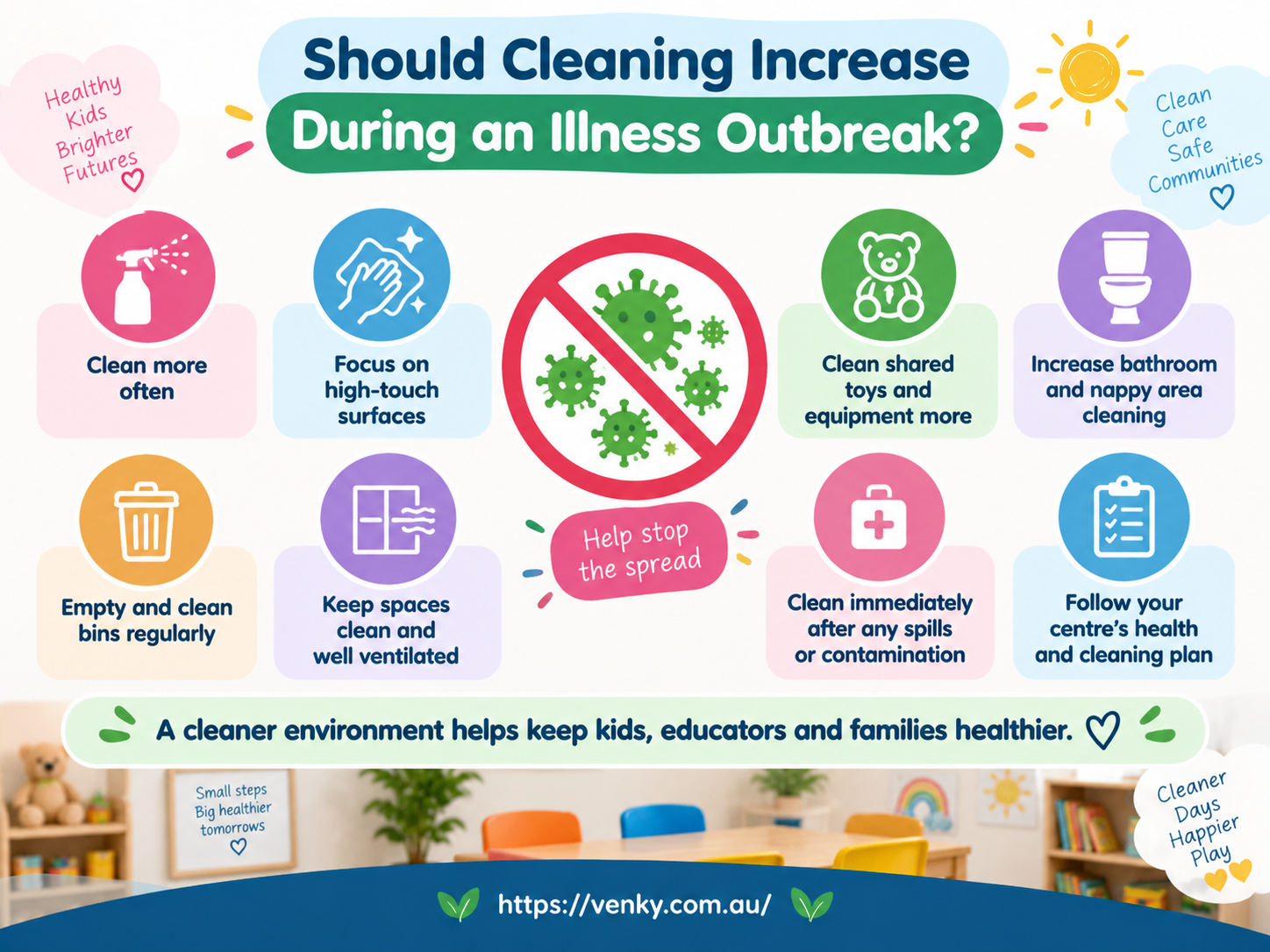
Frequently touched surfaces and shared equipment may require additional attention, while contaminated areas should be cleaned promptly. A more thorough cleaning process may be necessary to help break the chain of infection.
Create a Consistent Cleaning Schedule
There is no single cleaning frequency that suits every childcare centre. A practical schedule should combine daily routine cleaning, frequent attention to high-touch and contaminated areas, and periodic deep cleaning.
For childcare centres across Kiama, Dapto and Shellharbour, professional commercial cleaning can help maintain consistent standards while allowing educators to focus on caring for children.
A well-planned routine for childcare cleaning in Shellharbour and the other regions is not simply about making a centre look tidy. It is an important part of maintaining a clean, safe and hygienic environment for children, educators and families.
Keep Your Childcare Centre Clean and Hygienic
A consistent cleaning routine helps create a safer, healthier environment for children, educators and families. If your childcare centre in Kiama, Dapto or Shellharbour needs reliable professional cleaning, choose Venky’s Property Services Pty Ltd. Our cleaning team is experienced in childcare environments and tailored cleaning schedules. Call 0434 586 376 now.
- What should be cleaned more frequently than once a day in a childcare centre?
High-touch surfaces, bathrooms, nappy-changing areas and frequently shared toys may need cleaning multiple times throughout the day, particularly when visibly dirty or contaminated.
- Should childcare toys be disinfected after every child uses them?
Not necessarily. The appropriate frequency depends on the toy, how it is shared and whether it becomes contaminated. Toys should be cleaned promptly when visibly dirty, mouthed or exposed to bodily fluids.
- How should a childcare centre respond to vomit or other bodily fluid spills?
The contaminated area should be isolated and cleaned promptly using appropriate cleaning and disinfection procedures. Cleaning equipment should also be handled hygienically to prevent contamination elsewhere.
- Does carpet in a childcare centre require professional cleaning?
Yes. Routine vacuuming removes surface dirt, but periodic professional carpet cleaning can address embedded dirt and residues that regular vacuuming cannot remove. Frequency should reflect usage and contamination levels.
- How can a childcare centre determine its ideal cleaning frequency?
Consider the number and age of children, room usage, activities, surfaces, toilet and nappy facilities, food preparation areas and previous contamination incidents. These factors can be incorporated into a documented cleaning schedule.
- Should cleaning schedules change during a gastro or respiratory illness outbreak?
A centre may need to increase cleaning and disinfection of frequently touched surfaces and shared equipment during an outbreak. The response should follow current public health and childcare hygiene guidance.